Gluten-free sourdough, made at home
Real sourdough bread.
No gluten.
Your own starter.
If you’ve gone without good bread since going gluten-free, this is where it comes back. A gluten-free sourdough starter is just flour, water and a few minutes a day, and it gives your loaves the tang, crust and depth that store-bought gluten-free bread rarely has.
Paperback guide and companion workbook by Sophie Lavigne · Available on Amazon
Is this for you?
You’ll love this if…
You don’t need baking experience. You need a jar, some flour and a little curiosity.
- You eat gluten-free and miss bread that actually tastes like bread
- You’ve paid for gluten-free loaves that crumble, dry out or taste like cardboard
- You tried a starter before and it went flat, smelled odd or grew something strange, and you never knew why
- You like knowing exactly what goes into your food
- You want a calm kitchen ritual that takes a few minutes a day
Why make your own starter
A few minutes a day. Bread that’s worth it.
Flavour you can’t buy
Slow fermentation gives sourdough its gentle tang and deep, toasty flavour. That character is what most gluten-free loaves on the shelf are missing.
It costs almost nothing
A starter is flour and water. Once it’s established, it keeps going for as long as you feed it, so every loaf begins with something you already have.
You choose every ingredient
No long labels. You pick the flours and know exactly what is in your bread, which matters when you cook around a dietary need.
A free mini-lesson
Your starter’s first week, at a glance
Here is what normally happens, so nothing catches you off guard. Keep your jar somewhere warm, around 24–27 °C (75–80 °F).
Day 1
Mix
Stir together equal weights of whole-grain gluten-free flour (brown rice works well) and lukewarm water until it looks like thick pancake batter. Cover loosely and leave it somewhere warm.
Days 2–3
Watch, don’t worry
You may see a burst of bubbles, then nothing at all. That quiet spell is normal. Start feeding once a day: keep part of the starter, then stir in fresh flour and water.
Days 4–7
Find a rhythm
Bubbles return and the smell turns pleasantly sour, a bit like yogurt. A grey liquid on top just means it’s hungry: pour it off or stir it in, then feed.
Week 2
Ready to bake
Your starter is ready when it rises and turns bubbly within about 4 to 8 hours of every feeding. Gluten-free starters often need 10 to 14 days to get there, so be patient.
One safety rule: pink, orange or fuzzy patches mean mould. Throw it out and start again. If you avoid gluten for medical reasons, use flours labelled certified gluten-free.
Go further
Everything you need, from first jar to first loaf
The guide teaches you. The workbook keeps you on track. Use one, or pair them.
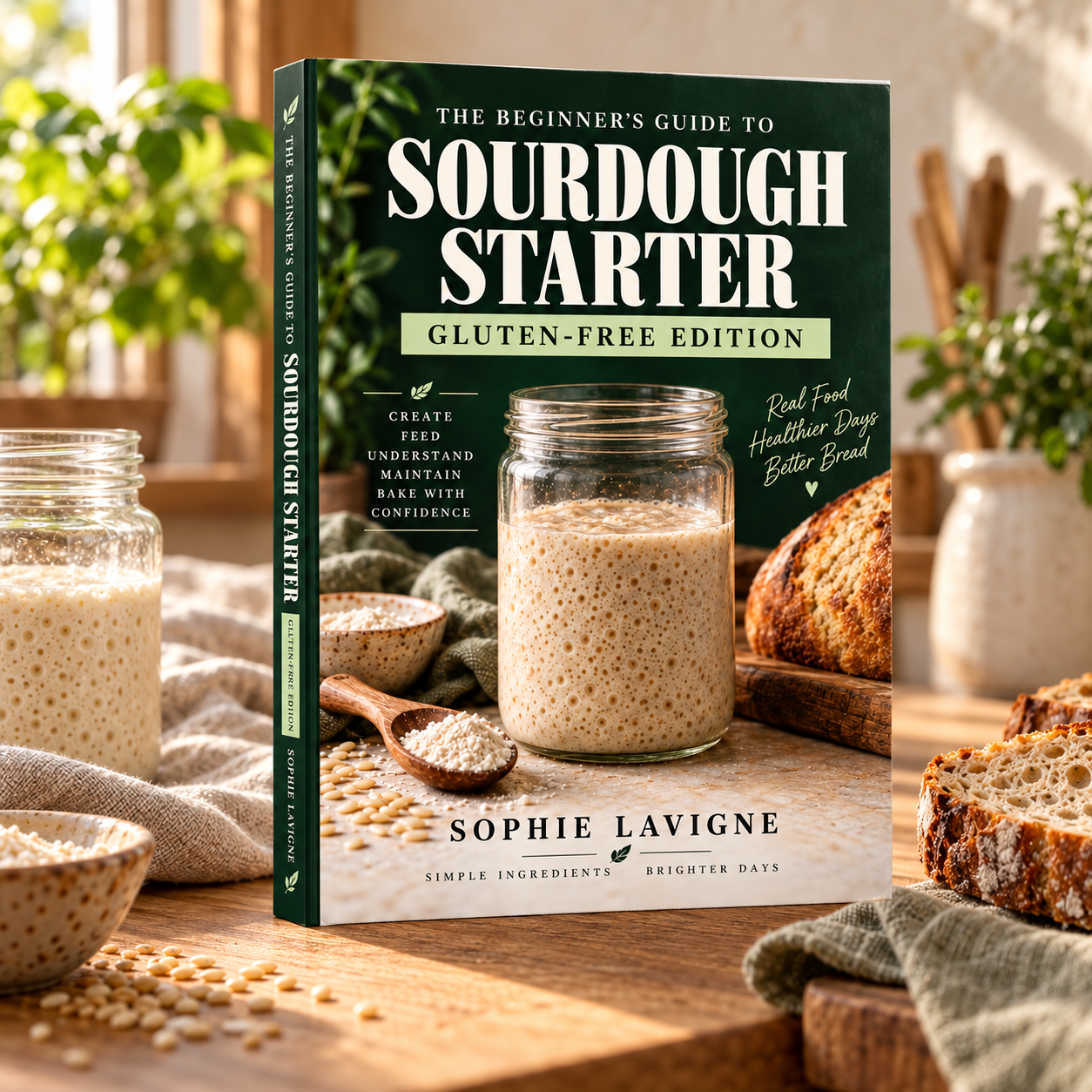
The guide
The Beginner’s Guide to Sourdough Starter: Gluten-Free Edition
A beginner-friendly guide that walks you through every step, from your first mix to a strong, active starter that keeps thriving in your kitchen.
- How to create your first gluten-free starter with simple, accessible ingredients
- Step-by-step feeding schedules and maintenance tips
- How to read the signs of a healthy, active starter
- Practical troubleshooting for common challenges
- Tips for preparing your starter for gluten-free baking
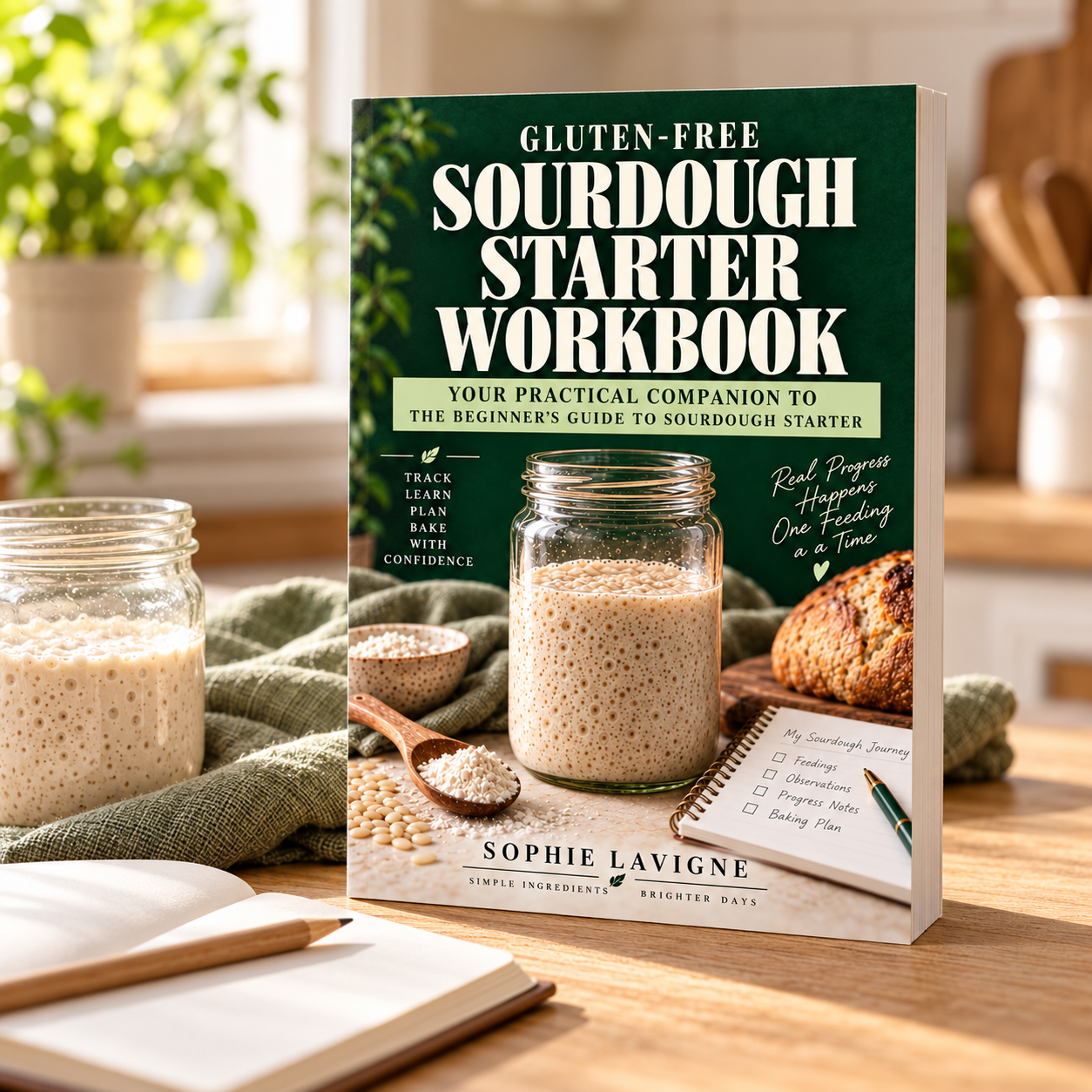
The companion workbook
Gluten-Free Sourdough Starter Workbook
Your practical companion to the guide: a place to track, reflect and plan, so you build confidence and spot problems early.
- Track feedings and record observations
- Monitor fermentation and spot the signs of a healthy, active starter
- Troubleshoot common challenges
- Plan maintenance schedules
- Set goals and prepare for baking delicious gluten-free bread
Sold and shipped by Amazon. Prices and formats are on each Amazon page.
Good questions
Before you begin
Do I need special equipment?
A clean glass jar, a spoon and a kitchen scale are enough to start. A scale helps because gluten-free flours vary a lot when measured by the cup.
Can I use any gluten-free flour?
Whole-grain flours such as brown rice, buckwheat or sorghum feed a starter best. Refined flours and starches give the yeast less to eat, so they usually come later, in the bread dough itself.
How much time does it take each day?
Feeding takes about five minutes. Most of the work is done by the starter while you get on with your day.
I’ve never baked before. Is this too advanced?
No. The guide is written for beginners and starts with the starter itself, before you bake anything.
Make a little room for yourself.
Start with the free 7-Day Cozy Reset.